

Most Romans were happy to see the forces of Alexios Komnenos and then his son John II liberating them from Seljuk Turkish occupation. However there were a few Romans in Anatolia did not welcome liberation, such as the people of Lake Pousgouse – who were Christians that came to see the “Romans as their enemies.” This caused Niketas Choniates to remark that “custom reinforced by time, is stronger than race or religion.”

Most Romans welcomed the liberating armies of John II Komnenos, but not the independent people of this lake. These people had come to enjoy their autonomy on the islands. In a way, they were like their own little independent micro-state. That was never gonna last too long, but I can see why they enjoyed the status at the time. The Emperor John II Komnenos was here to liberate Anatolia, not to play games with stubborn locals.
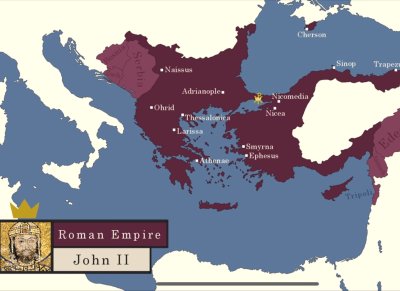
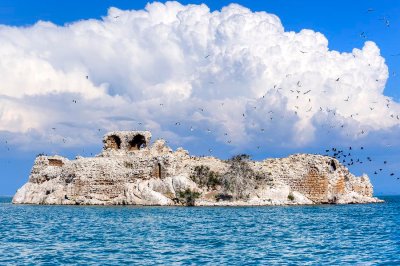
John Komnenos had established himself during the spring of 1142 in the strategic city of Attaleia (modern Antalya) to “establish greater order in the surrounding provinces. Some of those, among them Lake Pousgouse, had already submitted to the Turks. Stretching out into an immense sea-like expanse, Lake Pousgouse contained islets scattered throughout which were protected by stout walls. These islands were inhabited by colonies of Christians who crossed Ikonion in their barks and light boats and, by mingling with the Turks, not only strengthening their mutual bonds of friendship but they also maintained strong commercial ties.”
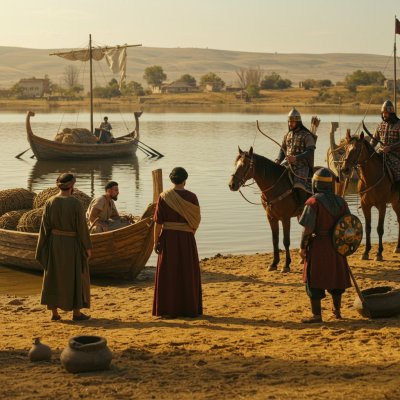
“Allied with their neighbors, they looked upon the Romans as their enemies. Thus custom, reinforced by time, is stronger than race or religion. These people, secure in the protection of the watery girdle of the lake, wickedly accused the emperor of being an enemy and arrogantly refused to submit to his ordinance; those things which they could not judge sanely they conceived in madness. John exhorted them to remove themselves from the lake, as it was an ancient Roman possession, and to go over to the Turks should that be their wish.”
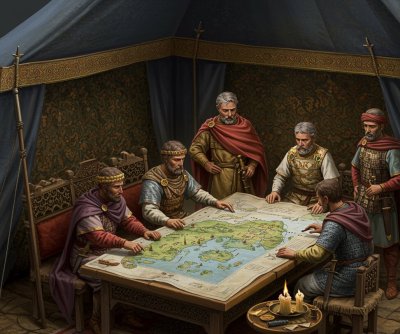
“Should they not comply, however, he threatened that he would not put up with them and their keeping the lake from the Romans for long. Since his words had no effect, he began military operations.” John was not the kind of Emperor who would accept this insolence, and he had the military capability, expertise, and martial vigor to enforce his rule. Military operations thus began, the Romans stormed the islands.

“Lashing fishing boats and light transports together and forming a platform on which he placed siege engines, he assaulted the fortifications along the lake.” The Romans were able to take the islands, and I am unsure what punishments were doled out to their leaders, but I imagine something happened there to them.
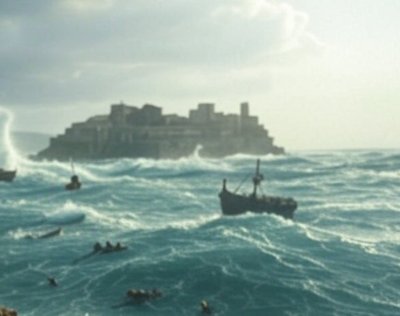
But, there was a price paid in blood, as always in war. “Although he succeeded in destroying them, the Romans did not sail away from that campaign without suffering losses; at times a strong wind would churn the waters of the lake, swelling them into roaring billows, and the transports would be swept away; capsizing, they lost their (human) cargo to the wavy deep.”
The people of this lake, due to their unique geographic position likely had no desire to return to paying taxes. There are always winners and losers even in tough times, even in this case the conquest of Anatolia by the Turks. It seems their position on the lake meant they did not suffer Seljuk raids and thus they could safely trade with them and profit, while avoiding imperial taxes. Choniates is clear this was an exception, that not many Romans resisted liberation in this way, it was not the norm.
Source:
O City of Byzantium, The Annals of Niketas Choniates
 shadowsofconstantinople.com