

A year after the fall of Constantinople in 1204 the Latin Emperor Baldwin led an army against a Roman rebellion in Thrace. He led them to disaster. The Latins were ambushed and crushed by Cuman steppe riders, fighting for the Bulgarian ruler Kaloyan, at the battle of Adrianople on April 14, 1205! This battle would put a quick check on Latin power in the Balkans following the Fourth Crusade.
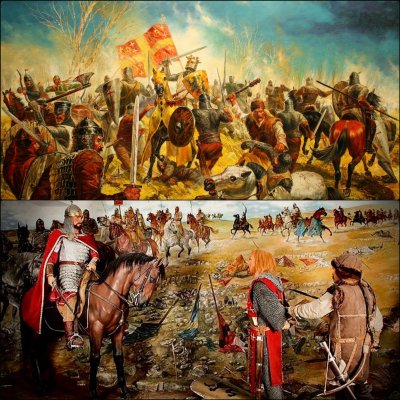
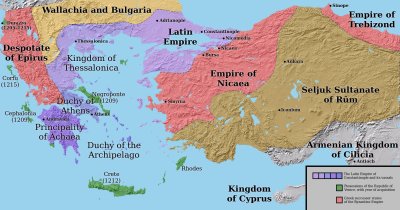
In 1205, just as Romans were resisting in Greece and Anatolia, some decided to rise up against the occupiers in Thrace. Many Latin lords had just been granted these lands, but were killed by the Romans, or forced to flee to Constantinople. But why did the Romans suddenly rebel?
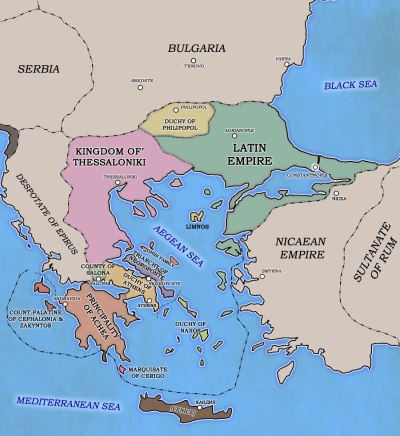
Image Credit: Made by Alexander Stoyanov
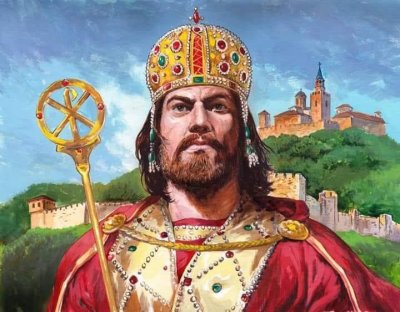
There were Romans in Thrace who didn’t have a place in the new political order. “They appealed to Baldwin to accept their services.” When he denied them, “they approached Ioannitsa (Kaloyan).” He ordered them “to return to their homelands and inflict every possible injury on the Latins.”
“As soon as Emperor Baldwin was informed of the rebellion of the Romans [23 February 1205], he quickly dispatched an army to punish the cities in revolt.” Some cities immediately submitted, but at Arkadiopolis some minor fighting occurred.
The Romans had abandoned Arkadiopolis but then tried to return and attack the Latins. They were not high quality soldiers and were easily smashed by the Crusaders. After this skirmish the Romans fled and retreated to Adrianople where they were stronger and had allies in the Vlachs and Cumans.
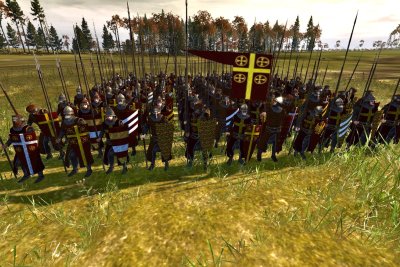
In March 1205 the Emperor “Baldwin, Count Louis of Blois, and the doge of Venice, Enrico Dandolo, each at the head of his own troops, marched out” from Constantinople. They arrived at Adrianople on March 29, and made camp a safe distance from the city to prepare for a siege. The Roman rebels would pay for causing trouble. The Crusaders took Constantinople! What could Adrianople do to stop them?
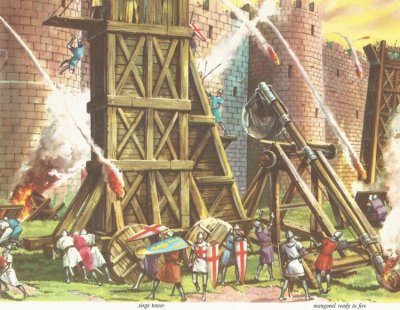
The next day “they moved their forces up the wall and positioned their siege engines. For many days they accomplished nothing because the walls were so sturdy.” They tried to undermine the walls, unsuccessfully. Now the Latins were bogged down in a siege. More importantly, they were being watched by Kaloyan and his army.
Then Kaloyan, after a couple weeks of this siege, lurking undetected by the Crusaders, sent out Cuman steppe riders to attack the livestock of the Latin army. He was “wishing to learn by this tactic the enemy’s plans and troop dispositions [13 April 1205].” By attacking in a quick raid, he could see how the Crusaders reacted.
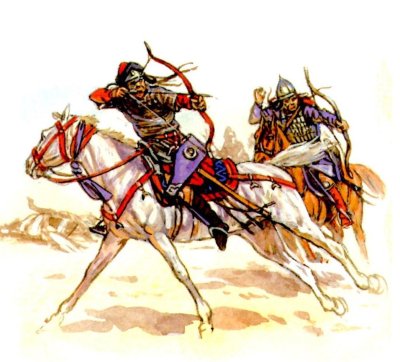
As they always did, the Latins blindly “charged full force, whereas the Cumans wheeled around in full retreat and shot their arrows from behind” as they rode away. The heavy Latin knights couldn’t keep up with the lighter horse archers, and though they recklessly chased after them, their pursuit failed. But Kaloyan saw potential in the way the Latins reacted impulsively.
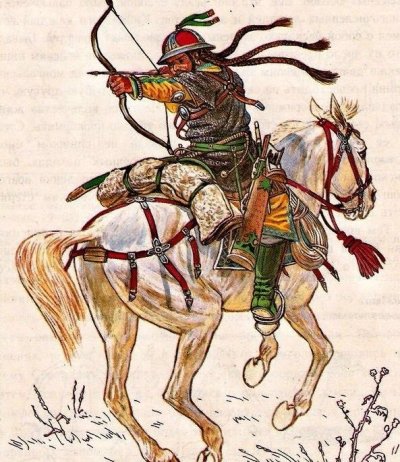
The next day, April 14, Kaloyan “lay in ambush in the defiles with his own troops, deploying his men along the ravines and hilltops so that the enemy would not easily detect his presence.” Then he sent out a large contingent of Cumans, and they once again harassed the Latins. Kaloyan knew exactly how the Latins would react.
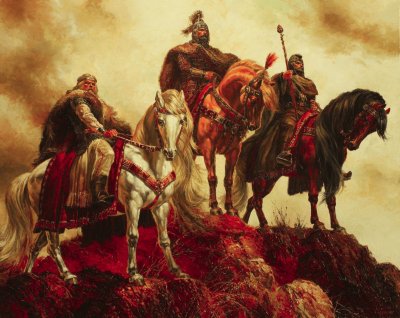
The Latins fell for the trap, and behaved predictably. When the Cumans turned around, the Latins pursued them vigorously, just as they had done the day before. Kaloyan could not have hoped for anything else. The Latins “were completely unaware of where they were going and rode into the” ambush without hesitation.
The Latin horses began to tire, and they “were ensnared by the unwearied Cuman troops, cut off, and encircled.” Among the Latins was Emperor Baldwin and Count Louis of Blois. In the chaotic fighting the knights were thrown from their horses. It was devolving into a slaughter.

For the crusaders, it became a terrifying slaughter. “One was surrounded by many: the throats of the stiff-necked were exposed to the scimitar or to the noose, and many of their horses were mutilated.” There was no way out, and no way to win. “As the Cumans fell upon them like a never-ending black cloud, they could not disentangle themselves or find any means of escape.”
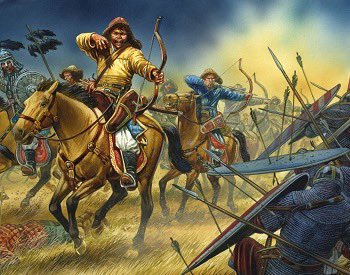
Choniates seems to take joy writing this line: “So fell the flower of the Latin host.”
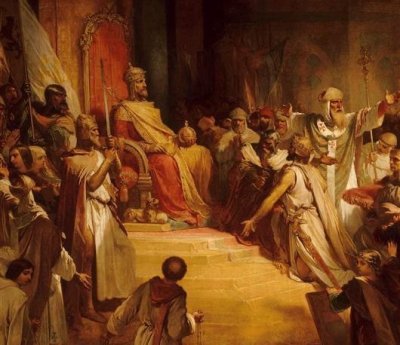
“Count Louis of Blois also fell, and Baldwin was taken alive and led to Mysia, whence he was conducted to Tarnavo, where he was cast into prison and bands were clamped on his neck.” The mighty had fallen, with only a year to enjoy the spoils of destruction in Constantinople.
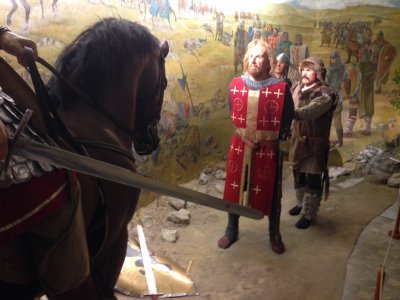
The elite troops, the Latin heavy cavalry, were mostly wiped out. This would be a huge problem for the Latin Empire. But the rest of the army was intact and led by Doge Dandalo. He brought up the army, but when he learned of Baldwin’s defeat, “he forthwith withdrew in his reins and rode back to the camp.” This was no time to take a risk!
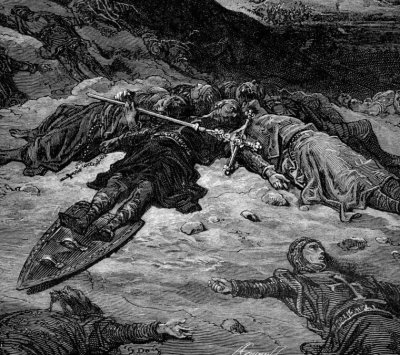
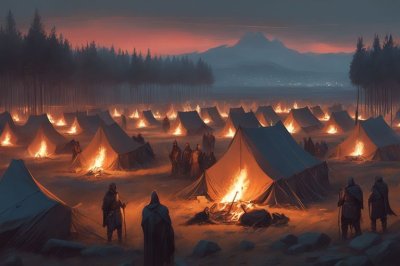
During the night Dandalo “ordered lights brought to the tents and large numbers of torches set up so that it would not appear that the entire army had been crushed or that they were afraid to give battle.” Dandalo took what remained of the army and retreated to Constantinople.
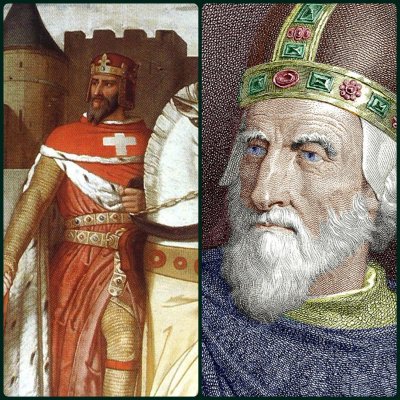
Dandalo met with Baldwin’s brother Henry. He had been fighting the Romans in Anatolia, but returned due to this situation. They agreed Henry would rule in Baldwin’s absence. Baldwin never returned, and Henry became the new Latin Emperor. But this battle had extreme consequences!
This battle weakened the Latin Empire as it tried to consolidate the lands held by the Roman Empire they tried to claim. Ultimately the state never annexed a large enough territorial base to be a successful power in the region. It would struggle to keep what it took.
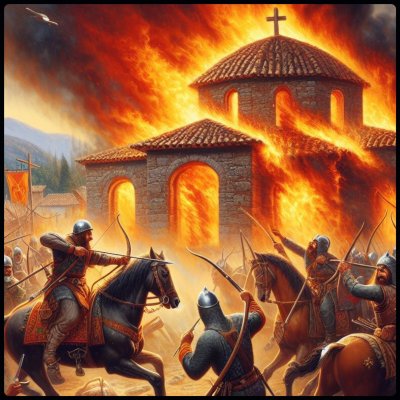
As for the Romans? They suffered the wrath of both the angry and defeated Latins, as well as from the Cumans who Kaloyan unleashed on Thrace, so they could plunder as reward for their victory. The Roman rebels in Thrace had been nothing more than a useful lure for the Latins.
“It was a strange and common evil to behold…Two races ravaged the same land…The Cumans plundered everything…Certain captives who were of exceptional beauty were flogged & sacrificed to their demons by hanging them.” For Roman civilians, “there was no place of salvation.”
Source:
O City of Byzantium, Annals of Niketas Choniates A crucial Roman primary source for the reigns of John II and Manuel Komnenos, the Angeloi, the Fourth Crusade, and the aftermath of 1204.
 shadowsofconstantinople.com