

Thessaloniki was the “second city” of the medieval Romans, it had survived many tough periods but “was the scene of almost uninterrupted military struggles and climactic political events between 1382 and 1430.” It fell to the Turks twice, first in 1387 and permanently in 1430!
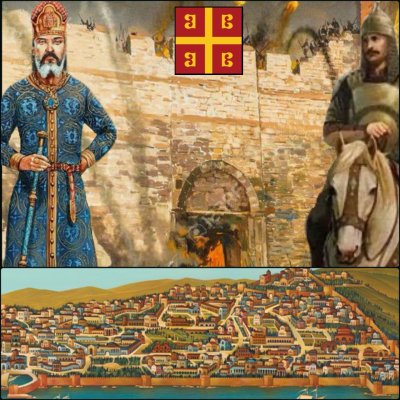
In 1383 the Ottomans began blockading Thessaloniki, and the situation was bleak for the people of the city as they starved inside. Manuel Palaiologos (the future Emperor Manuel II) was in charge and strongly against surrender, even taking resources from the churches to pay for resistance.

He truly had no other options, the Empire had routinely fallen into taking church lands to pay soldiers. And one can see why, the Ottomans ended up confiscating huge lands from the Church later anyway, the Church was an imperial institution that needed to contribute to the defense of the Empire.
Always being one in favor of resisting the Turks, he tried to persuade the people of the city to fight, but failed to convince them. On April 6 1387 Manuel left the city shortly before it fell. He would later become Emperor and travel to England and France seeking help from the West to save Constantinople from falling as well.
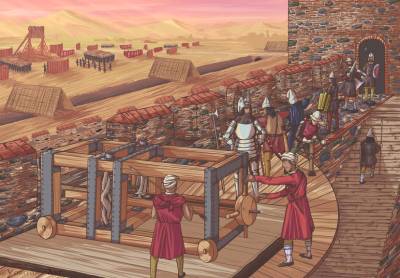
On April 9 the Ottoman army walked through the gates, which were opened for them. Because the city surrendered, it was not violently sacked, though the tributary payments meant a heavy tax burden on the citizenry. It remained under Ottoman rule for 16 years.
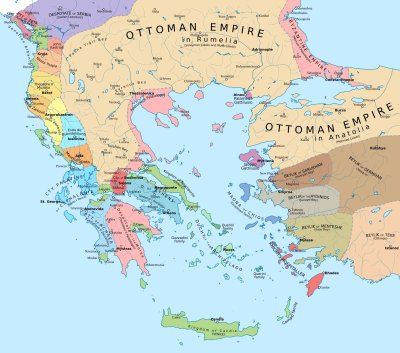
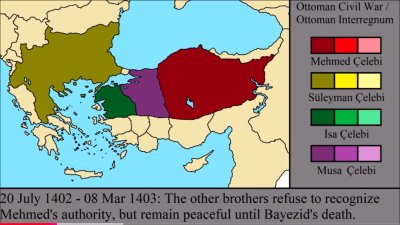
The Romans were able to liberate Thessaloniki diplomatically in the aftermath of the Battle of Ankara in 1402 when the Ottomans were crushed by Timur. This put the Ottomans into civil war between the sons of Sultan Bayezid, who was captured by Timur. Thessaloniki returned to Roman rule, and the Romans no longer paid tribute. The Turkish settlers that had arrived in Thessaloniki after its conquest left as part of the deal.
In 1422 Sultan Murad II unleashed his fury on the Romans for intervening in the Ottoman succession, he laid siege to Constantinople as well as Thessaloniki. Though Constantinople survived, he maintained the siege on Thessaloniki. After months of siege, it became clear the Romans could not defend it. The Despot Andronikos then, with imperial approval, offered Thessaloniki to the Venetians.
The Venetian Senate approved the deal in a 99-45 resolution, and took over. They provided more soldiers and their fleet brought in food, the Ottoman navy had no chance to gain naval superiority. Tensions also rose between the Romans and the Venetians. According to Donald M. Nicol “the Venetians became fearful that the inhabitants would open the gates and they took to deporting upper-class Greeks to the islands or to Venice.” The city struggled on for years, with people fleeing and the population falling as low as just 10,000.
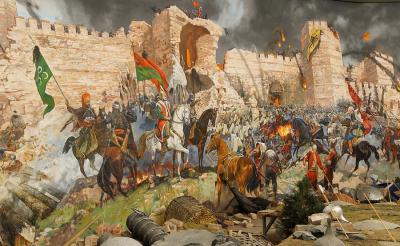
Murad II personally led a huge army against the city in March 1430. He attacked the weakest section of the walls on the eastern side, and the defenders took heavy casualties to repel his army before the defense failed. Because the city had not surrendered, it was treated far more harshly than when it fell in 1387.
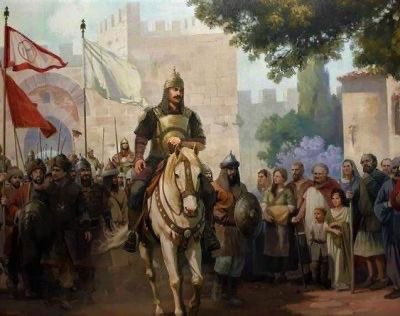
According to Donald M. Nicol after the Turks broke in “they poured over and through the walls, brandishing their swords, tore through the streets like a hurricane…A few lucky souls managed to get away by boat. But large numbers of the people, men, women, and children, were rounded up, shackled together and dragged out to the Turkish camp as slaves. For 3 days the buildings and churches were ransacked and pillaged.
When the Sultan called a halt to the plundering there was scarcely a stone left unturned. But it was not his intention that Thessalonica should become an empty ruin. Once he had taught the Greeks their lesson Murad set about restoring their confidence and rehabilitating their city. His soldiers were made to evacuate the houses in which they had quartered themselves and restore them to their owners. He paid from his own funds the ransom money for many of the well-to-do citizens who had been captured.”
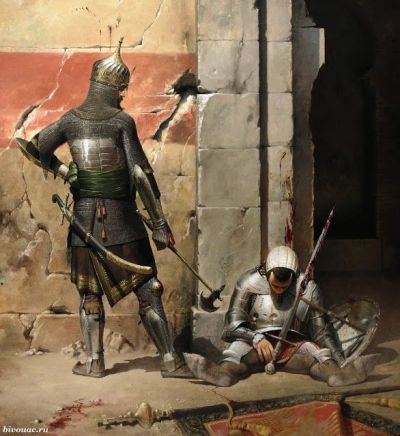
Kaldellis added that “Ioannes Agnostes, an eyewitness who wrote an Account of the Last Sack of Thessaloniki, says that the Romans were coerced into fighting by the Venetians and implies that it would have been better to surrender from the start and not have to endure the Venetian oppression, the siege, and the sack.”
Sources:
The New Roman Empire: A History of Byzantium by Anthony Kaldellis
The Last Centuries of Byzantium by Donald M. Nicol
 shadowsofconstantinople.com