

Philadelphia was the last free Roman city in western Anatolia. Its fall in 1390 is part of one of the humiliating sagas in Eastern Roman history. As part of a calculated punishment, the Ottoman Sultan forced two sons of Emperor John V to help conquer their own people!

THE BACKGROUND: A RISING EMPIRE AND A CRUMBLING EMPIRE
Serbian defeat, or at best a pyrrhic victory, at Kosovo in 1389 left Constantinople isolated and vulnerable to the Ottomans. “Resistance to the Turks was now more effectively shattered in Europe than it was in Asia Minor. But the new Sultan Bayezid was determined to make his word law throughout Anatolia…”
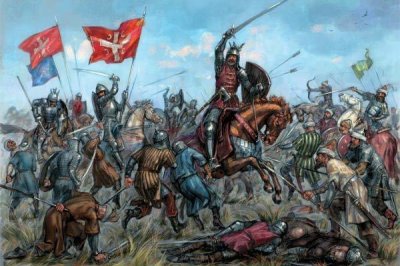
Bayezid intended to incorporate the remaining Turkish beyliks into his growing empire by force, not just diplomatic means as his predecessors had often done. Bayezid fought the “Karamans and deliberately dispossessed the emirs of Aydin, Saruhan, Menteshe and others, making their lands subject to his empire.” The Ottoman Empire as a major power was being forged.

But there was a Roman piece of land the Sultan eyed – the city of Philadelphia. He also understood divide and conquer, and wanted to use these kind of typically “Byzantine” tactics against the Romans. “Bayezid was even more adept and ruthless than his father at weakening Byzantine resistance by setting one member of the ruling family against another.”
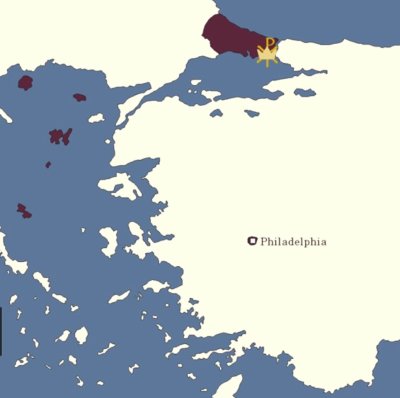
Bayezid used the greed of the Palaiologos family, a tendency which caused many civil wars, against the Romans. He pursued a plan which backed John VII in a coup, and provided him some troops to do it. In these events the reigning Emperor John V was nearly toppled! “Bayezid provided him with the necessary troops to force his way into Constantinople and drive out his grandfather.” In April of 1390 John VII took the palace and control of the city, except for one area.
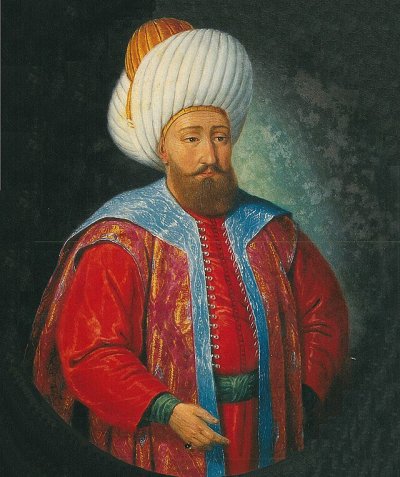
However, John V “barricaded himself into the fortress by the Golden Gate of the city and from there made contact with his son Manuel. Otherwise, for about four months, John VII was in control of Constantinople. Bayezid had played his first trick skilfully.” It almost worked too, the Romans may have gone down a lot easier if this occurred, perhaps more like Romulus Augustulus.
Manuel II rescued his father, with help from the Knights Hospitaller (who had previously conquered Rhodes from the Romans) and restored his father to the throne. John VII fled to the court of Bayezid, who let him govern Selymbria, but as an Ottoman vassal. But, Bayezid’s temper was hot against John V and Manuel for defying his plans. Now he was going to humiliate them.

The Romans “were faced with a number of peremptory demands from the Sultan. The customary tribute was to be paid to him at once, and Manuel was to proceed as a hostage to Anatolia, taking soldiers to help in the campaign for the aggrandisement of the Ottoman Empire in Asia.” Manuel II thus had to go to Bayezid and submit, and even fight against his own people!
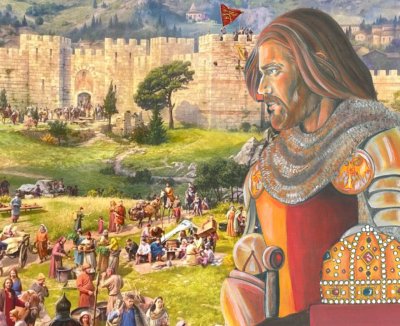
John VII was called up as well, Bayezid had a special mission in mind for the Roman princes. “In the autumn of 1390 both were required to assist him in laying siege to Philadelphia, the one Byzantine city in Anatolia which had consistently refused to surrender.” The Romans had to help conquer their last city in their ancient lands. A true insult and an unimaginable humiliation.

Allegedly Manuel and John had to prove themselves and were “first over the walls.” The city eventually surrendered. Thus it was that the stubborn city of Philadelphia fell. However, the humiliation didn’t end there either…Bayezid had a special plan for John V back in Constantinople as well.
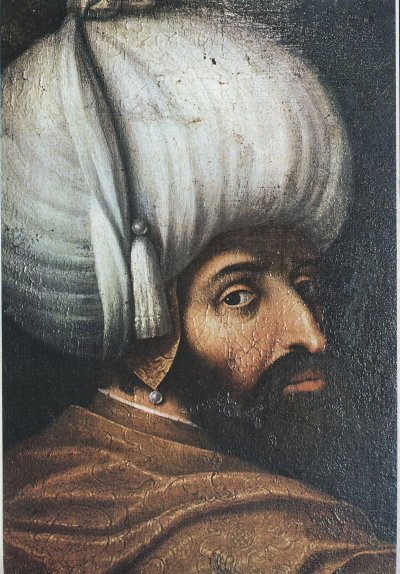
Bayezid also sent word to the elderly John V in Constantinople, he had to make a tough choice. He was ordered to destroy the Heptapyrgion fortress that had saved him from John VII’s coup. Bayezid was now dictating how the Emperor even managed the city of Constantinople!

“Anxious that the Turks would assault the city, John had strengthened the fortifications of the castle by the Golden Gate. He was now commanded to demolish them. If he disobeyed his son Manuel would be imprisoned and blinded.” The order was given to dismantle his fortification.
“The shocks and humiliations inflicted upon him by Bayezid took their toll of John V’s declining strength. He shut himself up in his palace and died on 16 February 1391. He wasn’t yet 60 years of age.” He died as a humiliated man ruling a humiliated empire, succeeded by Manuel.
SOURCES:
The Last Centuries of Byzantium by Donald M. Nicol
 shadowsofconstantinople.com